
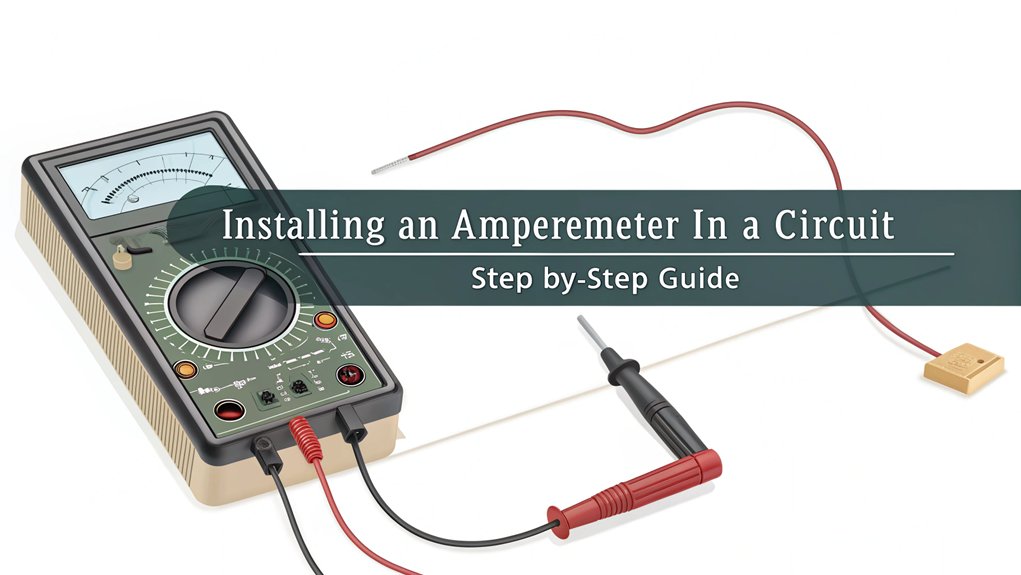
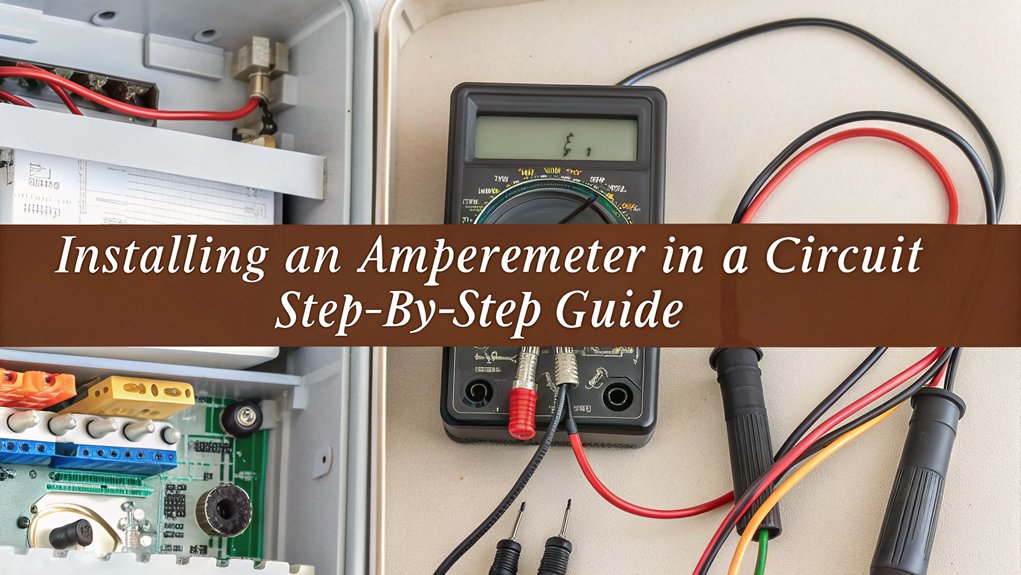
To install an ammeter in a circuit, start by disconnecting the battery for safety. Identify and cut the charging wire from alternator to battery, then strip its ends. Connect the ammeter with heavy gauge wire, ensuring the positive aligns properly. All electrical loads should link to the ammeter’s positive terminal. Reconnect the battery, positive first, and check for stable readings. By progressing further, you’ll grasp detailed solutions for precise installation.
TLDR
- Disconnect the battery to prevent electrical shocks and ensure safety before installation.
- Cut and strip the charging wire connecting the alternator to the battery for ammeter integration.
- Connect the ammeter in series using heavy gauge wires to manage high current flow.
- Ensure all electrical loads are connected to the ammeter’s positive terminal for accurate readings.
- Reconnect the battery and monitor the ammeter for normal operation, disconnect if abnormal discharge occurs.
Safety Precautions and Initial Preparations
Before diving into the installation of an ammeter, you must prioritize safety and make necessary preparations to guarantee a smooth process.
Begin by disconnecting the battery to prevent accidental short circuits or electrical shocks. This is an essential safety precaution.
Next, make certain all connections to the ammeter use heavy gauge wire. This choice accommodates high current flow and minimizes overheating risks.
Clean and secure all terminals and connections to avoid voltage drops, making certain of precise ammeter readings.
Familiarize yourself with the ammeter’s manual to align with the manufacturer’s safety guidelines.
Additionally, integrate fuses into the circuit to protect against overloads and fire hazards.
Your meticulous preparation and adherence to safety measures are critical for a successful installation.
Identifying the Charging Wire and Cutting
To efficiently install your ammeter, begin by locating the charging wire that connects the alternator to the battery; this is essential for monitoring current flow.
Once you’ve identified the charging wire, use a wire stripper to carefully cut it, making sure sufficient length remains on both ends for secure connections. Strip approximately 1/2 inch of insulation from each cut end to expose the copper, which will facilitate a reliable connection to the ammeter.
Before proceeding, verify the wire is clean and free from corrosion; this guarantees accurate readings.
Double-check the circuit for any additional connections that might be impacted by cutting the charging wire, as this will prevent disruptions in the electrical system.
Precise preparation guarantees peak ammeter performance.
Connecting the Ammeter Using Heavy Gauge Wires
Now that you’ve prepared the charging wire, it’s time to connect the ammeter using heavy gauge wires. These wires must handle the alternator’s maximum current, making sure the ammeter works efficiently without overheating.
Connect one terminal of the ammeter to the alternator’s output and the other to the starter lug. Confirm the positive terminal aligns with the battery’s positive side, while grounding the negative terminal is crucial for accurate readings.
Follow the manufacturer’s wiring instructions precisely to avoid damage.
Regular inspections are essential:
- Inspect connections for wear and tear regularly.
- Verify the gauge wire is adequate for the current load.
- Make certain all connections are tight to prevent electrical hazards.
Proper setup guarantees the ammeter functions safely and effectively.
Ensuring Proper Connections for Electrical Loads
When setting up your ammeter, guaranteeing proper connections for electrical loads is essential for accurate readings and safe operation. Connect all electrical loads, such as lights and accessories, to the positive terminal of the ammeter. This critical connection allows you to measure the total current flow through the circuit effectively.
Use heavy gauge wire for the connections to handle the maximum current output from the alternator without overheating. Install the ammeter in series with the main charging wire from the alternator to the battery, guaranteeing it monitors charging and discharging currents accurately.
Avoid routing the heavy cable from the starter solenoid through the ammeter. Finally, double-check all connections for tightness and proper insulation to prevent short circuits and guarantee safe operation.
Reconnecting the Battery and Testing the Setup
Before you start reconnecting the battery, double-check that all wiring connections to the ammeter are secure and insulated to prevent short circuits.
Use the correct gauge wire to avoid overheating. When you’re ready, follow these steps:
- Connect the Positive Terminal First: Attach the positive battery terminal to minimize spark risks.
- Then Connect the Negative Terminal: Secure the negative terminal afterward for a safe connection.
- Monitor the Meter Closely: After the battery is connected, measure the current to verify normal readings.
Keep an eye on the meter for any unusual activity. If you observe a constant discharge without a load, disconnect the battery immediately to inspect for faults.
Proper setup guarantees your ammeter functions accurately and safely within your circuit.
Monitoring and Interpreting Ammeter Readings
To effectively monitor and interpret ammeter readings, guarantee you’re familiar with the device’s specifications and your vehicle’s electrical system.
Start by ensuring the current flowing through the ammeter aligns with its rating; a gauge pegged at 50 AMPs shouldn’t handle more. Regularly monitoring readings allows you to track whether the battery’s charging (positive readings) or discharging (negative readings).
Connect the IN terminal to the current source and the OUT terminal to the load for accurate readings. Keep an eye on fluctuating readings as they might indicate issues like a failing alternator or battery problems.
Frequently Asked Questions
What Is the Rule for Placing an Ammeter in a Circuit?
To place an ammeter in a circuit, you must wire it in series. Connect the positive terminal to the power source, and attach the negative terminal to the load. This guarantees current flows through the ammeter for accurate measurement.
Use heavy gauge wires matching the circuit’s maximum current to prevent overheating. Never connect it across a voltage source. Confirm all connections are secure and insulated to avoid short circuits.
How Do You Set up an Ampere Meter?
Think of setting up an ammeter like adding a checkpoint in a marathon; it monitors the current flow.
First, wire the ammeter in series with the circuit, connecting one terminal to the power source and the other to the load. Use heavy gauge wires to prevent overheating, and guarantee the ammeter’s rating matches the maximum current.
Illuminate the gauge through the dash light circuit. Double-check connections and consult the manufacturer’s guidelines.
How Would You Connect an Ammeter Into an Electrical Circuit Correctly?
To connect an ammeter correctly, place it in series with the load. Connect one terminal to the power source, the other to the load.
Use heavy gauge wires to handle maximum current and prevent hazards. Attach the ammeter’s positive terminal to the charging circuit, negative to the battery’s positive terminal.
If you’re using a shunt, place it in series and connect the ammeter in parallel. Double-check connections against specifications.
Where to Draw an Ammeter in a Circuit?
Did you know that over 80% of electrical circuit failures result from incorrect ammeter placement?
To draw an ammeter effectively, place it in series with your circuit. Connect the IN terminal to the alternator’s output and the OUT terminal to the battery.
Make certain you use heavy gauge wires to handle the current without overheating. Verify the ammeter’s rating aligns with your circuit’s maximum current to guarantee accuracy and safety.
Conclusion
You’ve successfully installed your ammeter, guaranteeing accurate monitoring of current flow in your circuit. Wasn’t it easier than you thought? By following each step diligently, you’ve secured the connections and guaranteed safety. Now, regularly check the ammeter readings to detect any anomalies in electrical loads, which helps prevent issues before they arise. Stay vigilant, and enjoy the confidence that comes from understanding your circuit’s behavior. Your electrical expertise just got a significant upgrade!